The Timmelsjoch Experience

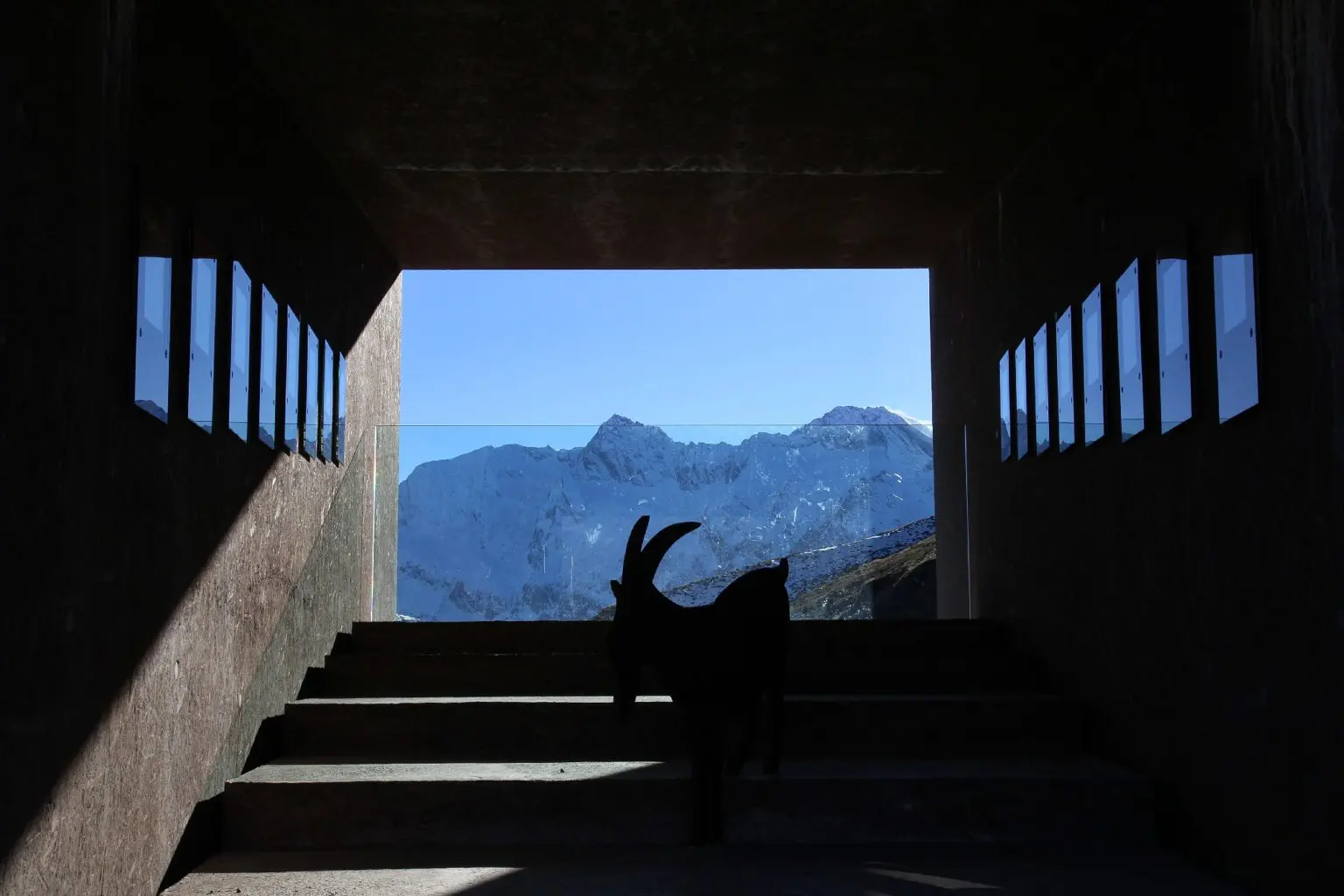
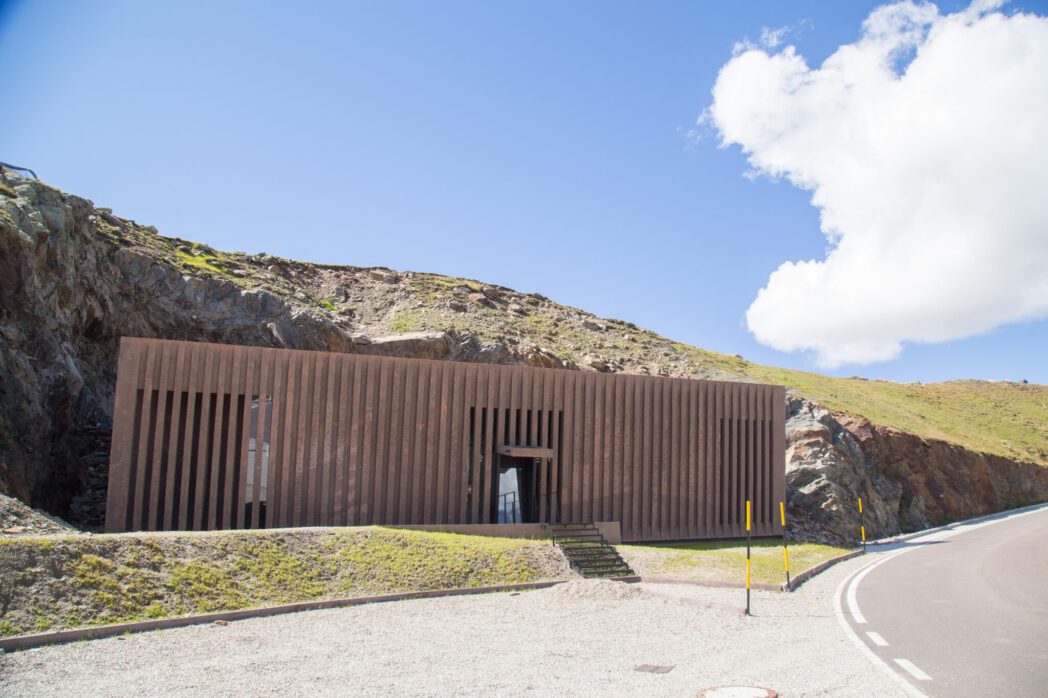
Six small museum facilities have been established along the Timmelsjoch High Alpine Road between Moos in Passeier and Obergurgl. They offer special highlights for architecture enthusiasts. The structures, designed by architect Werner Tscholl, provide an introduction to the shared history of the Passeier Valley and the Ötztal Valley, while addressing various themes through architecture (e.g., the theme of smuggling). Admission to all seven stations is free.

The Granat

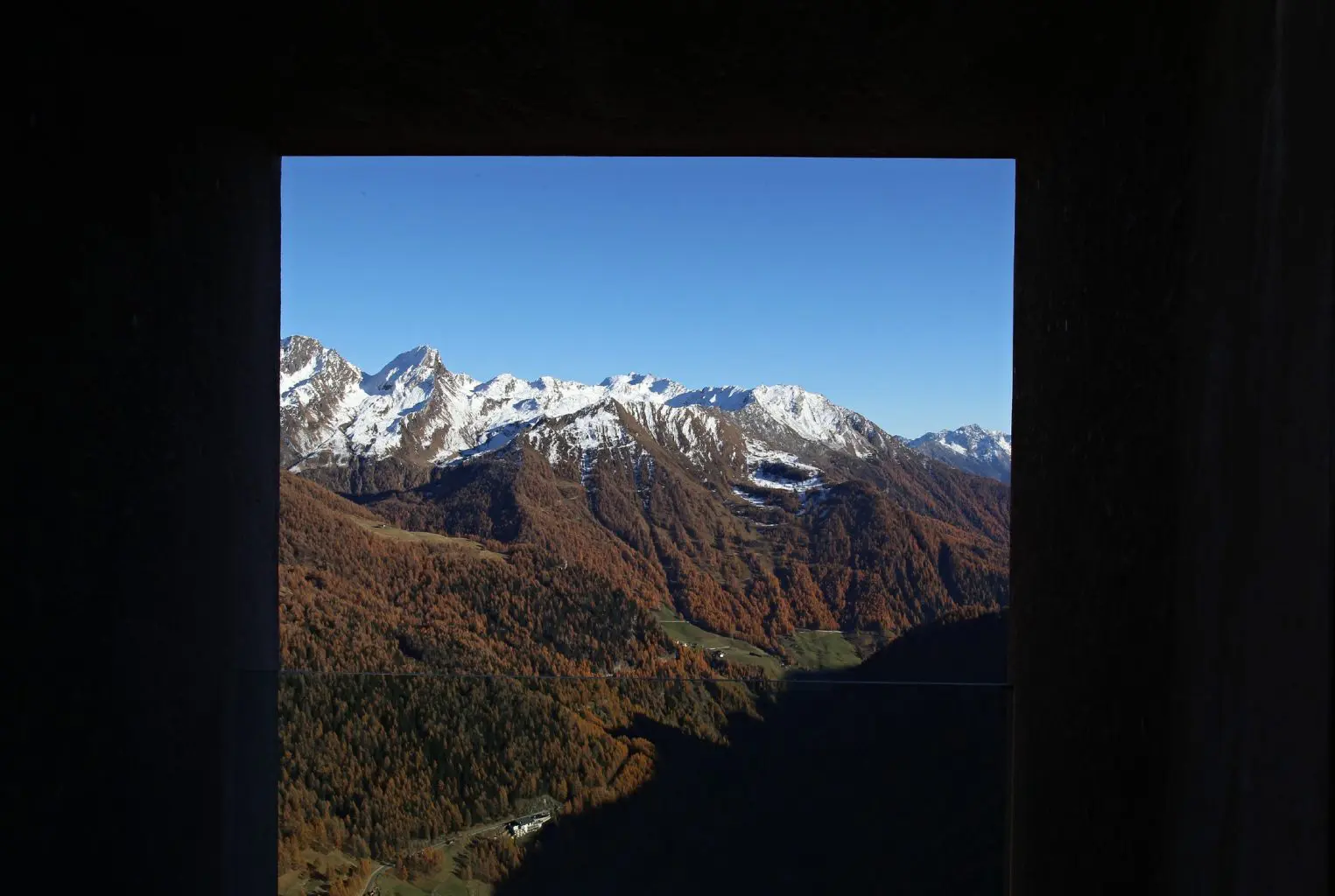
On the Timmelsjoch Road, just above Moos, at the turnoff to Stuls, you can marvel at the first stop on the Timmelsjoch Experience—the “Granat.” The exhibition space, built above a rocky slope, is modeled after the Granat, a geological rock formation in the Passeier Valley. From the viewing platform, you have a wonderful view of Moos and the upper Passeier Valley. Here you’ll learn that this was the border with Mussolini’s Italy, fortified with six bunkers—part of the Alpine Wall. You’ll also find information about South Tyrol’s highest waterfalls and the village with the most children in Europe.


The telescope

At the large clearing below the Scheibkopf, you’ll find the second stop—the “telescope.” Take in the breathtaking 180-degree panorama overlooking the Texel Group Nature Park, the pristine Seeber Valley, and the Passeier Valley—the home of the Tyrolean freedom fighter Andreas Hofer. Through the telescope, you can see even more clearly how strikingly the “Granatkogel” (3,304 m) and the “Hohe First” (3,403 m) rise from the eternal ice of the glaciers.

Timmel_Transit


The Timmel_Transit Museum, located in a former Italian military barracks at the Timmelsjoch Pass, chronicles the construction of the Timmelsjoch Road and serves as an important addition to the existing Pass Museum. This museum was established through an Interreg project. The main focus is on the natural and cultural heritage of the upper Passeier and Ötztal valleys, with an emphasis on sustainable growth and the establishment of cross-border connections.
The creation of another small museum facility on the Italian side completes the museum concept, which includes the Pass Museum at the Timmelsjoch. Both facilities are connected by a circular trail. The museum opened in 2018. The occasion marked several anniversaries: the 100th anniversary of the end of World War I, the 50th anniversary of the opening of the Timmelsjoch Road on the Italian side, and over 20 years since the Schengen Agreement.

The Pass Museum

Perched directly on the Timmelsjoch, the Pass Museum stands like a solitary rock, straddling the border between Italy and Austria while simultaneously connecting the two parts of Tyrol. In recognition of the remarkable achievements of the pioneers who built the mountain pass road, the museum tells the story of the Timmelsjoch High Alpine Road from the groundbreaking ceremony to its completion.

The exhibition also features interesting facts about the heyday of trade across the Timmelsjoch Pass from the early 13th century to the end of the 15th century, a brooch from pre-Christian times, and much more.

The Smuggler

Further along the High Alpine Road, past the Timmelsbach Bridge, a walk-in cube awaits you—“The Smuggler.” Here you can get a sense of the dangers smugglers faced in the high mountains. A good 10-hour trek—mostly at night—and heavily laden with a full backpack, a smuggler had to make his way across the Timmelsjoch via secret paths. At any moment, his life was in danger from avalanches, rockfalls, freezing to death, falling, or even trigger-happy customs officers.

Walkway

“The walkway” is located at the toll station in Hochgurgl, on the North Tyrolean side. This is the fifth and final stop along the museum trail on the pass road. Here you will find information about the landscape and the history of settlement in the high-alpine region of Hochgurgl/Obergurgl. Among other things, the exhibition hall provides detailed information about the “Obergurgl Swiss Stone Pine Forest” natural monument and the scientifically proven effects of the Swiss stone pine on humans.

Just like the physicist Auguste Piccard, who was forced to make an emergency landing on the Gurgler Ferner glacier in May 1931 with his stratospheric hot-air balloon, you can enjoy a breathtaking panoramic view of the Ötztal mountains—including numerous 3,000-meter peaks—from the viewing platform.

Further Informations: the Timmelsjoch-experience